There is a lot of confusion out there about progesterone. And by confusion I mean people are just getting it flat wrong with the labels and terms they use so I want to set this record straight. Allow me to use an illustration:
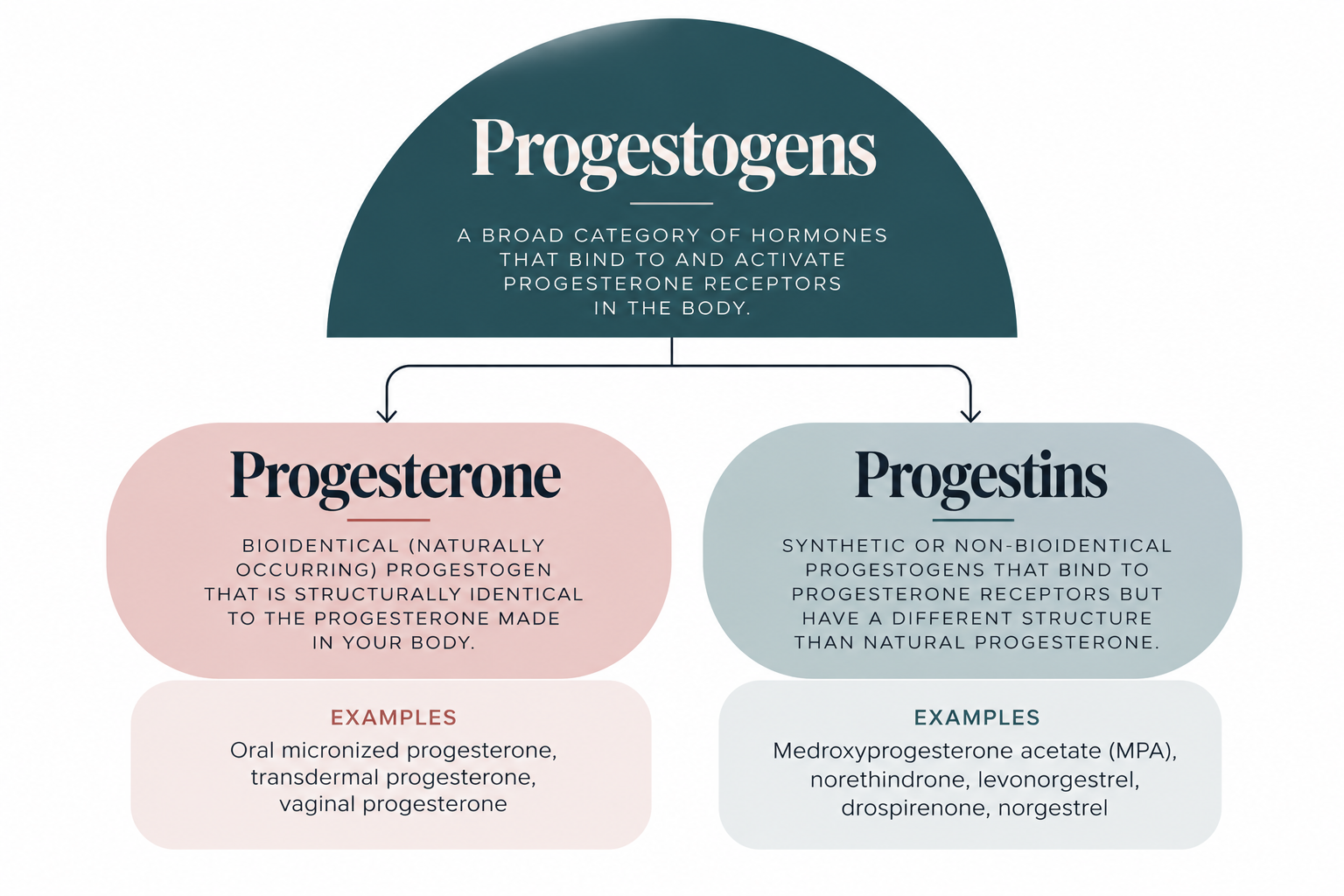
Progesterone + progestins are NOT THE SAME THING. Although a lot of practitioners (unfortunately) lump them all together so their patients and everyone else are also lumping them together.
This isn’t about right or wrong. Good or bad. It’s about using the correct terminology because definitions matter.
So what is ACTUAL progesterone. Progesterone in the prime reproductive years (and perimenopause) is a hormone that 98%+ of it is made via ovulation.
No ovulation. No progesterone for you (soup nazi anyone?)
Progesterone is a hormone produced mainly after ovulation that helps regulate the menstrual cycle, supports pregnancy, and influences sleep, mood, and the brain. It has a lot of other roles like being involved in bone health + remodeling. But we will keep it simple.
Progesterone typically is the first hormone to naturally decline in perimenopause. And, speaking from experience— I have found that women who are having babies at 35+ hit the need for progesterone sooner than those who have babies earlier or who have not had babies. This isn’t about saying something negative about women having babies later, it just is.
When progesterone starts to decline in perimenopause what women typically start to experience IRL: more annoyed, more stressed out about shit that didn’t bother them before, the RAGE, sleep disturbances and worsening PMS if that was something they were struggling with.
If you aren’t on progesterone HRT just yet and you want to see what your progesterone levels look like you’re going to want to pull that level 5-7 days post ovulation. I cannot say this enough: if you are not being told when in your cycle to test your hormones or your doctor isn’t asking “when in your cycle were these labs tested” they’re incompetent at best :) (at least about hormones).
If you’re not sure how to figure that out I made a free guide about How To Test Your Hormones.
Another way to look at hormones through the cycle is to use something like a Mira Monitor as it will give you daily levels or hormones + metabolites so that you can get a sense of what your patterns look like.
Get started with one of those here.
Here is the most important thing: progestins are a part of birth control and synthetic. Progesterone is what your body makes. ONE OF THESE… is superior for hormone replacement therapy in perimenopause and post menopause in my opinion. Does something like a mirena IUD have its time and place in perimenopause? Sure. Someone who has super heavy irregular bleeding and either doesn’t want to get a work up or they haven’t been able to get answers.
What progestins WON’T help with: Mood swings, rage, sleep/insomnia. In fact, depending on what type of progestin you are you it COULD. make things worse.
Make sure if you aren’t seeing me (and if you’re in Utah you SHOULD be seeing me) but if you’re not—be sure you ask your doctor for bioidentical progesterone. This does not mean that the product has to be compounded. Thankfully, we have an FDA approved product (prometrium) that is bioidentical progesterone to what our body’s make!
Wondering if progesterone therapy might be right for you? Let’s figure it out together!
If your brain is like FUCK YES I’ve been looking for you. Sign up for a Hormone Strategy Session Here.
If you want to know more you can always book a consultation call so you have the clarity + understanding you need (and yes again, with me— not a sales person or a bot :)
Disclaimer: The information on this blog is for educational purposes only and is not intended to diagnose, treat, cure, or prevent any disease. It should not replace personalized medical advice. Always consult your healthcare provider before making changes to your medications, supplements, diet, or treatment plan.