how to know if you’re in perimenopause after a hysterectomy (and how to test your hormones)
If you’ve had a hysterectomy but kept your ovaries your hormones are still cycling. You just aren’t bleeding to show it!
You will still go through perimenopause
You will still have a luteal phase
You will still have a follicular phase
This is so important to know and understand. Sometimes this procedure is also referred to as “partial hysterectomy” or hysterectomy without oophorectomy (removal of ovaries)— just so you know :)
So, how the fuck do you know if you’re in perimenopause?
First things first. The first signs of perimenopause usually have NOTHING to do with your cycle/bleeding. They’re changes in your sleep, insomnia, waking 1-3am, fatigue and mood changes— have you been shorter with your kids recently? hmmmm.
Friendly reminder that perimenopause is defined10-15 year neuroendocrine transition that can start as early as 35. So, while this is vague— i also find it to be very accurate: If you are 35 years or older and having symptoms— I’ll show a list of issues that can come up in perimenopause below— there is a good chance your hormones have started to change.
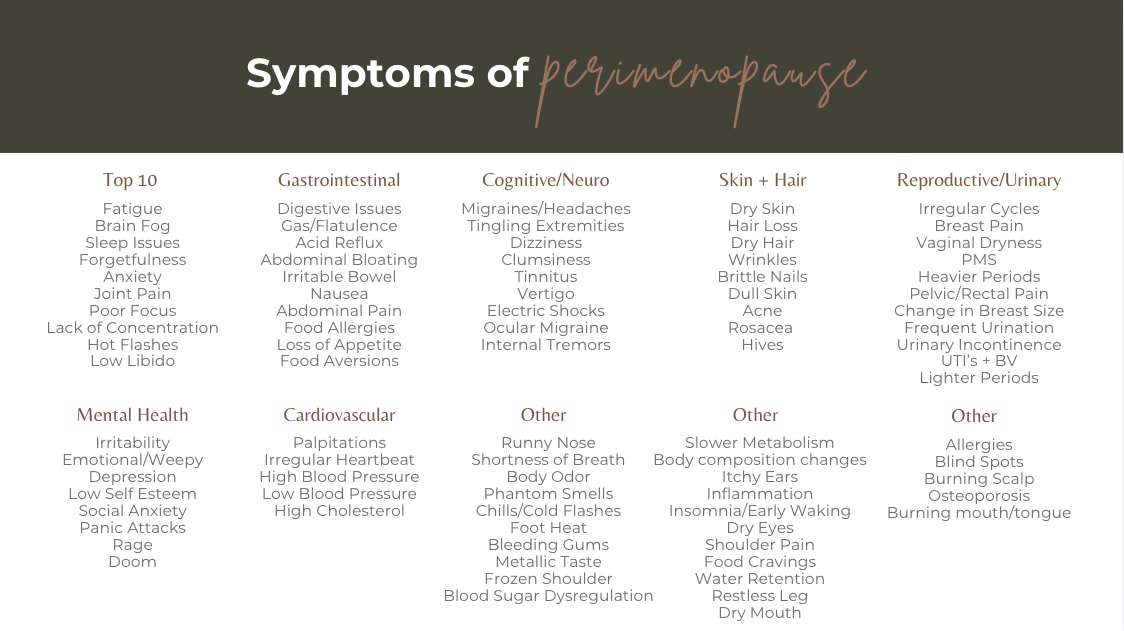
You’re probably looking at the list below going “a lot of other shit can cause those things”. HARD AGREE GIRL.
This is why proper testing, asking the right questions + putting the puzzle pieces together matter. Just because you’re 35 and fucking tired doesn’t mean perimenopause. Could it? Maybe. Could it not. Also maybe! Thats where my detective work comes in! Which I LOVE!
How to Test Your Hormones Without A Uterus
Spoiler alert: it really isn’t much different than IF you have a uterus.
The easiest + cheapest option: LH strips. LH is the hormone that typically surges about 24–36 hours before ovulation, so remember: these are ovulation PREDICTOR kits, not ovulation CONFIRMATION kits.
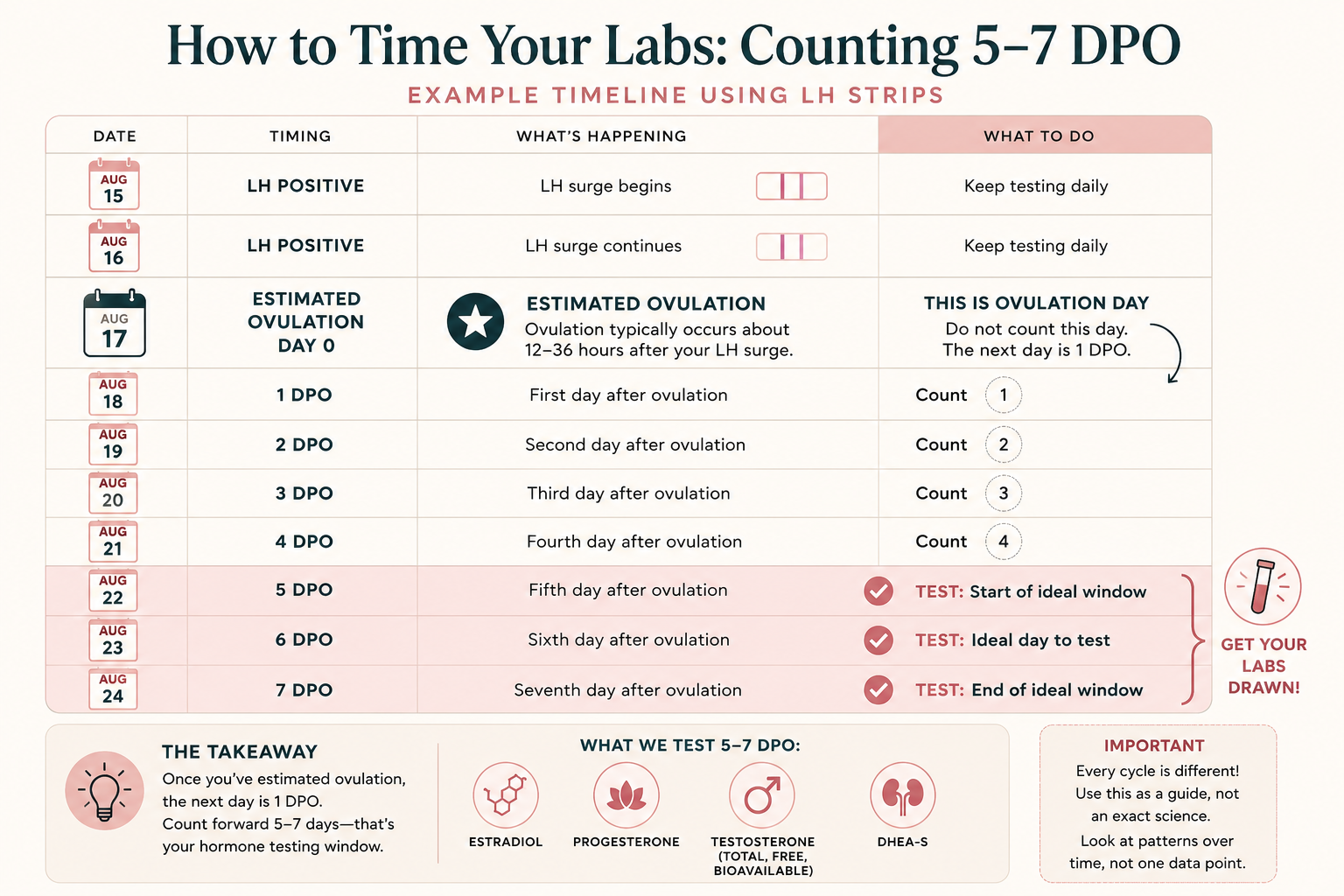
Start testing around cycle day 7 and continue daily until you see your LH surge (a positive test) followed by a return to negative. Ovulation typically occurs about 12–36 hours after the LH surge begins, so we use that pattern to estimate when ovulation occurred.
For example:
August 15: Positive
August 16: Positive
August 17: Negative → ovulation likely occurred around August 16–17
August 18: Approximately 1–2 DPO
Then count forward from your estimated ovulation date to schedule labs 5–7 days after ovulation to get your testing window!
I used an AI generated image below to help you get a visualization that I think is really helpful!
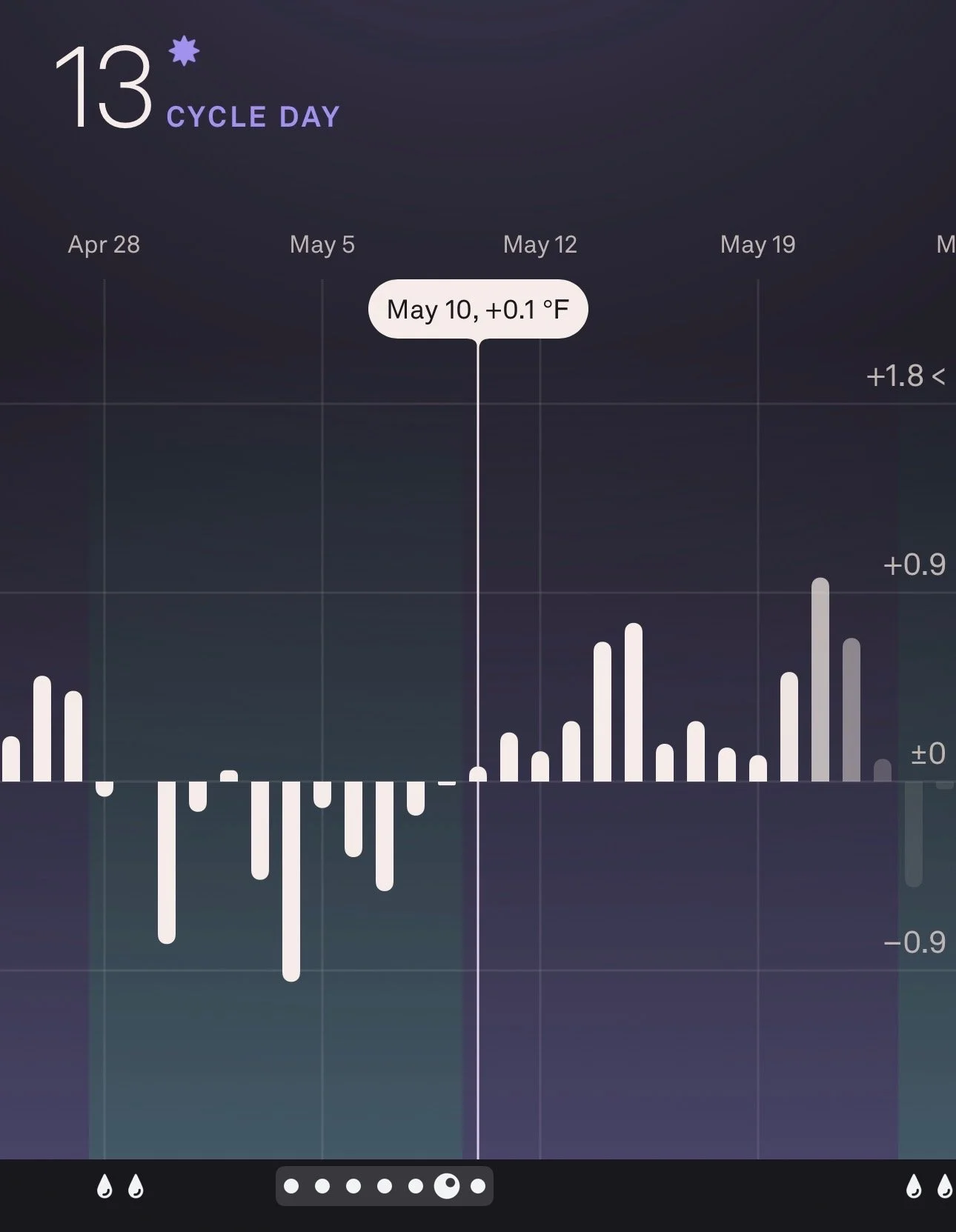
Speaking of other things I LOVE….tracking temperature. It isn’t cycle dependent and tells us when/if we are ovulating. Below is an image I shared in my prior blog in this series about ovulation. I have been collecting data with my Oura ring for 5+ years now. Because progesterone creates an increase in BBT (basal body temperature) so when we see that sustained for 5 days— its likely ovulation has happened (unless you were sick or something else played a role which is a totally different discussion.
We can still test your hormones VERY ACCURATELY for 5-7 days post ovulation only if you have temperatures. You can also use LH strips as well or BOTH! See Part III of this series for more details on all of this.
If your gyn or pcp is telling you “we can’t test because you don’t bleed” again, disrespectfully, they have no idea what they are doing.
And if you’re like DANIELLE WHAT ABOUT CYCLE DAY 3-5? I’m so glad you asked. You will notice both cycle day 1’s depicted here (the droplet underneath) that my temperature DROPPED on cycle day one BOTH TIMES. While every once in a while a womans temp MAY remain elevated the first few days in her follicular phase it is RARE. therefore the when we see three days of temp drop after what looks like a luteal phase— boom test— done!
If your brain is like FUCK YES I’ve been looking for you. Sign up for a Hormone Strategy Session Here.
If you want to know more you can always book a consultation call so you have the clarity + understanding you need (and yes again, with me— not a sales person or a bot :)
Disclaimer: The information on this blog is for educational purposes only and is not intended to diagnose, treat, cure, or prevent any disease. It should not replace personalized medical advice. Always consult your healthcare provider before making changes to your medications, supplements, diet, or treatment plan.